The Power of Brave Spaces in Schools and Communities
Brave Spaces: Working together against discrimination
As we approach Black History Month, it feels especially important to reflect on the environments we create for young people, not just in schools, but in every space where their voices deserve to be heard.
For many years, the idea of safe spaces has been central to how we think about inclusion and protection. A safe space is an environment where a person or group can feel confident they won’t be exposed to discrimination, criticism, harassment, or harm. Safe spaces offer protection and refuge, and they are vital.
But increasingly, we are recognising the power of brave spaces.
From safe spaces to brave spaces
Where safe spaces shield, brave spaces empower. They invite individuals to engage in courageous conversations, confront biases, and challenge perspectives constructively. Brave spaces are not always comfortable, but they are transformative.
Central to this shift is the emphasis on listening and understanding. Too often, adults speak on behalf of young people, through an adult’s lens, rather than genuinely listening and seeking to understand young people’s lived experiences. As we have all experienced at some point in our lives, it is extremely difficult to come forward and disclose something, even to our trusted friends, and especially face-to-face, which is, unfortunately, why many people stay silent.
As Dr Carlene Firmin highlights in her research (Contextual Safeguarding and Child Protection: Rewriting the Rules, 2020), adults will never fully understand the life experiences of young people, and the social rules that govern their lives make coming forward even harder. What we can do is create conditions that allow their voices to shape the culture around them. We can start the conversation by listening to our young people authentically and providing them with brave spaces to do so.
There is immense potential in providing young people with brave spaces, and we operate with an awareness of their varied life experiences, striving to respect and understand their social rules.
Get our blogs sent straight to your inbox.
The Student Voice platform
Our mission: “Creating brave spaces that empower young voices and inspire society to develop safer communities”, inspired the development of The Student Voice platform. It was designed with exactly this in mind, including a discrimination feature to educate students on the different forms of discrimination, protected characteristics, and the UK Equality Act.
Crucially, it also gives schools the opportunity to understand where their school culture is at, and where they can make a genuine impact in unifying and educating young people. It enables schools to clearly state their values and stance against discrimination, empowering students to hold the community accountable. For example, a school statement might read:
“We are a community of principled, compassionate, and open-minded learners. As such, we do not tolerate any type or form of discrimination. Please report any such incidents that you may have experienced and/or witnessed using the form below. Your disclosure will be anonymous unless you elect to share your email address.”
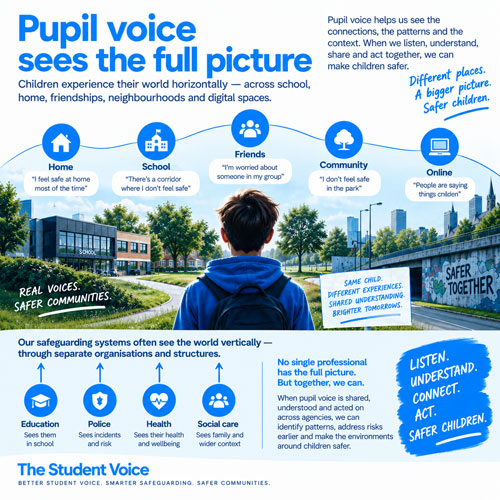
In addition to picking up incidents as they occur, the platform collects contextual safeguarding information, where, when, and how incidents occur, giving schools the ability to identify patterns and take wider-scale targeted action. Most importantly, the voice at the centre is always that of the young person. This is not an adult’s interpretation of events, but the child’s lived reality, with the option for them to state how they want to be supported.
Why brave spaces matter even more now
In polarising times, we must move beyond simply listening. Brave spaces ensure that young people are not just safe, but they are understood and emboldened. They provide the tools and the confidence to speak up, challenge injustice, and create change within their communities.
As we mark Black History Month, we are reminded that progress has always been driven by courage, by those willing to speak truth, challenge systems, and envision a more just world. By creating brave spaces for young people, we give them the platform to continue that legacy.
Reporting discrimination in UK schools
Incorporating the UK Equality Act (2010), The Student Voice Discrimination feature is a safeguarding resource designed to empower students to report and reflect on experiences of discrimination, including those related to race, gender identity, sexuality, religion and disability. Providing educational content through an age-appropriate experience, it defines the protected characteristics, different forms of discrimination, and reporting options to encourage young people to share what they have witnessed or experienced.
Grounded in the principles of The Lundy Model, this provides:
- A structured, safe space for students to share their experiences.
- A framework for schools to respond meaningfully and with accountability.
- Data-driven insights to inform policy, training and culture change.
The Student Voice Discrimination feature ensures every voice is heard and that every report leads to learning, action and protection. It is not just about identifying harm. It is about fostering equity, dignity and belonging in every school community, whilst centralising reporting discrimination for safeguarding teams and schools.

Reporting discrimination in international schools – the United Nations Rights of a child
The Student Voice International platform has been developed beyond UK settings, with a global perspective. It is grounded in the principles of the United Nations Convention on the Rights of the Child (UNCRC), a landmark legally binding agreement adopted by 196 countries (as of 12 July 2022). The UNCRC outlines the fundamental rights that every child is entitled to, regardless of race, religion, ability, or background. These are your rights as a child defined by the UNCRC. We have picked out some that you may wish to express your concerns about. This is a safe place for you to raise concerns, ask for support, and express your thoughts on how we can make our school community safer and happier for everyone.
The Convention contains 54 articles covering all areas of a child’s life, including civil, political, economic, social, and cultural rights. These rights are universal and must be upheld for every child. The UNCRC also sets out clear expectations for how adults and governments should work together to ensure these rights are respected and protected.
For example, Article 2 of the UNCRC states that no child should face discrimination of any kind, whether based on their own characteristics or those of their parents or legal guardians.
Through this platform, we invite young people to explore and learn about their rights, share their thoughts, raise concerns, and ask for support in a safe and respectful environment. Young voices matter, and together, we can build safer, more inclusive, and happier school communities for all.