Part 2: The Four Stages of Child Criminal Exploitation




Swipe the Carousel
The Four Stages of Child Criminal Exploitation
By Lisa, Escapeline
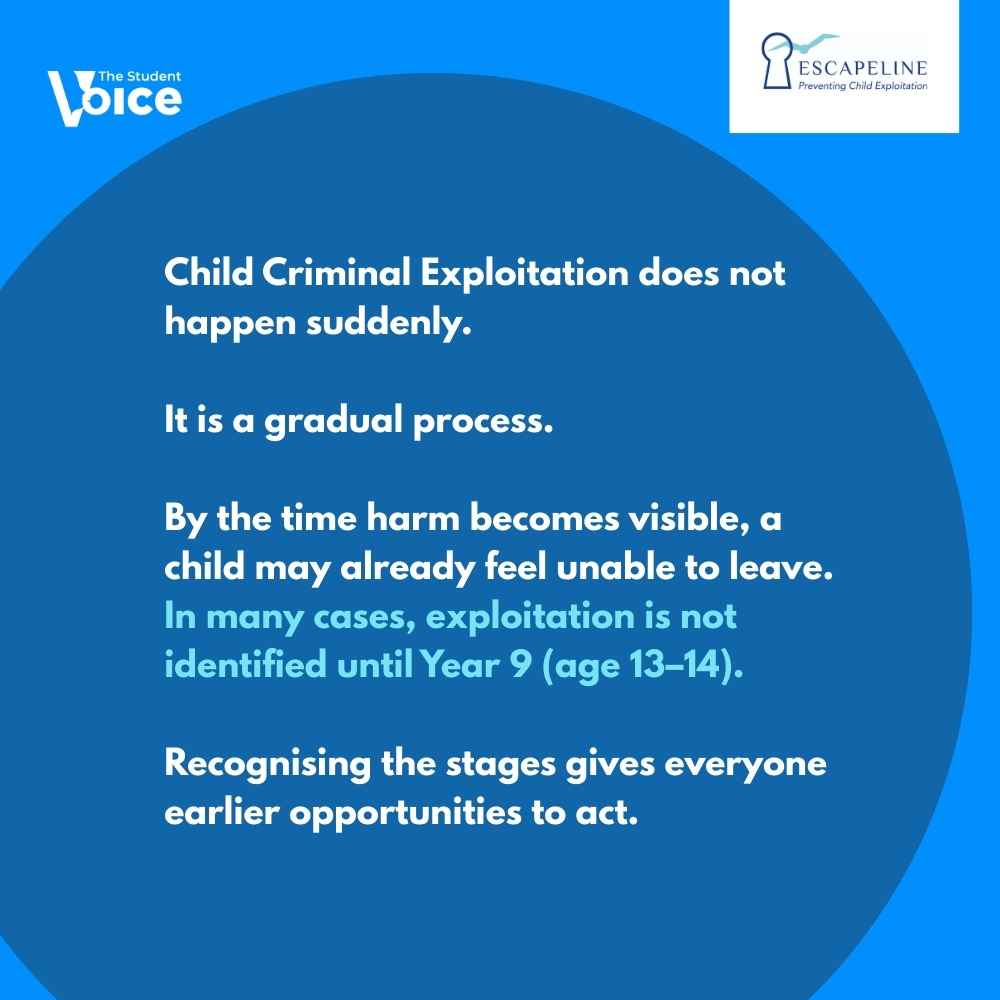
Child Criminal Exploitation does not happen suddenly.
It is not one dramatic moment. It is a process, gradual, strategic and deliberate. Those who exploit young people are skilled at building trust before they introduce risk, and by the time harm is visible, a child may already feel unable to leave.
Understanding the four stages of exploitation allows us to identify earlier intervention opportunities, before a young person becomes trapped.
1. The Targeting Stage
At this stage, a young person is being observed. This may happen:
- In parks, skate parks or community spaces
- In schools, often through peer networks
- Online, via Snapchat, TikTok, Instagram or gaming platforms
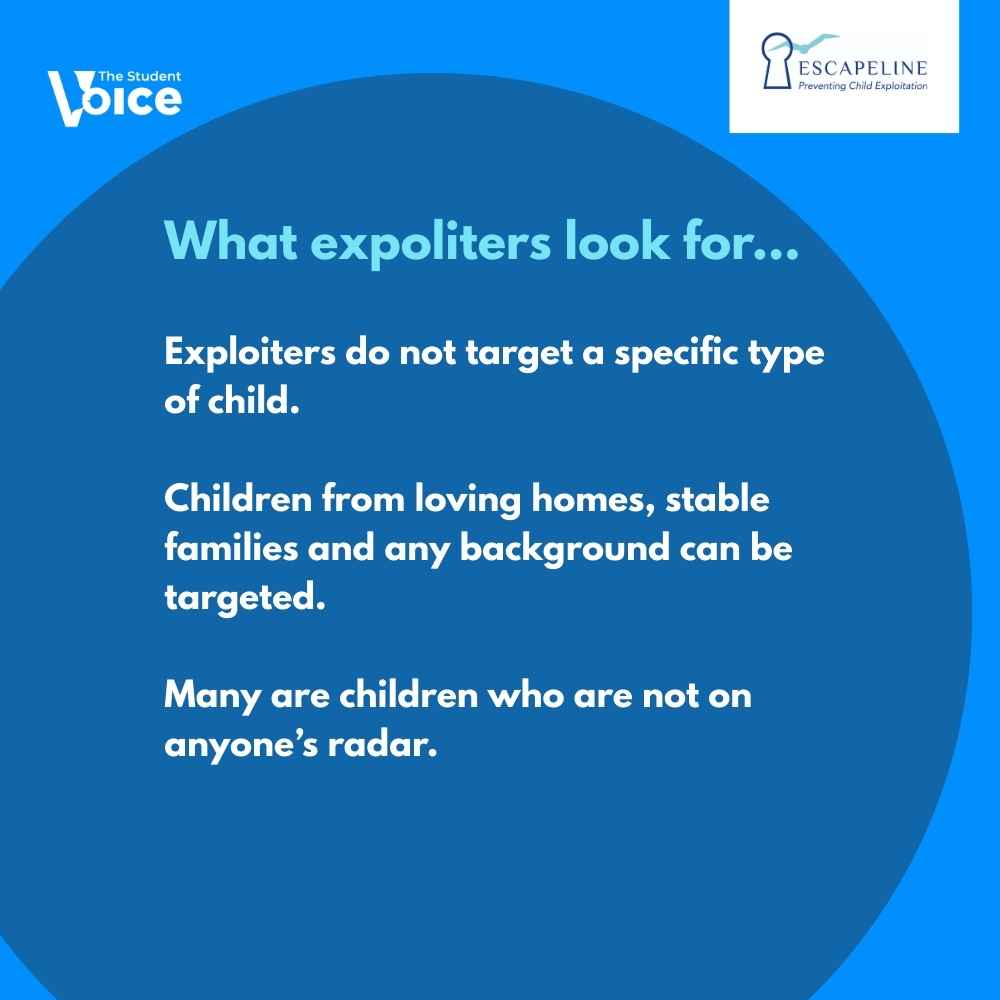
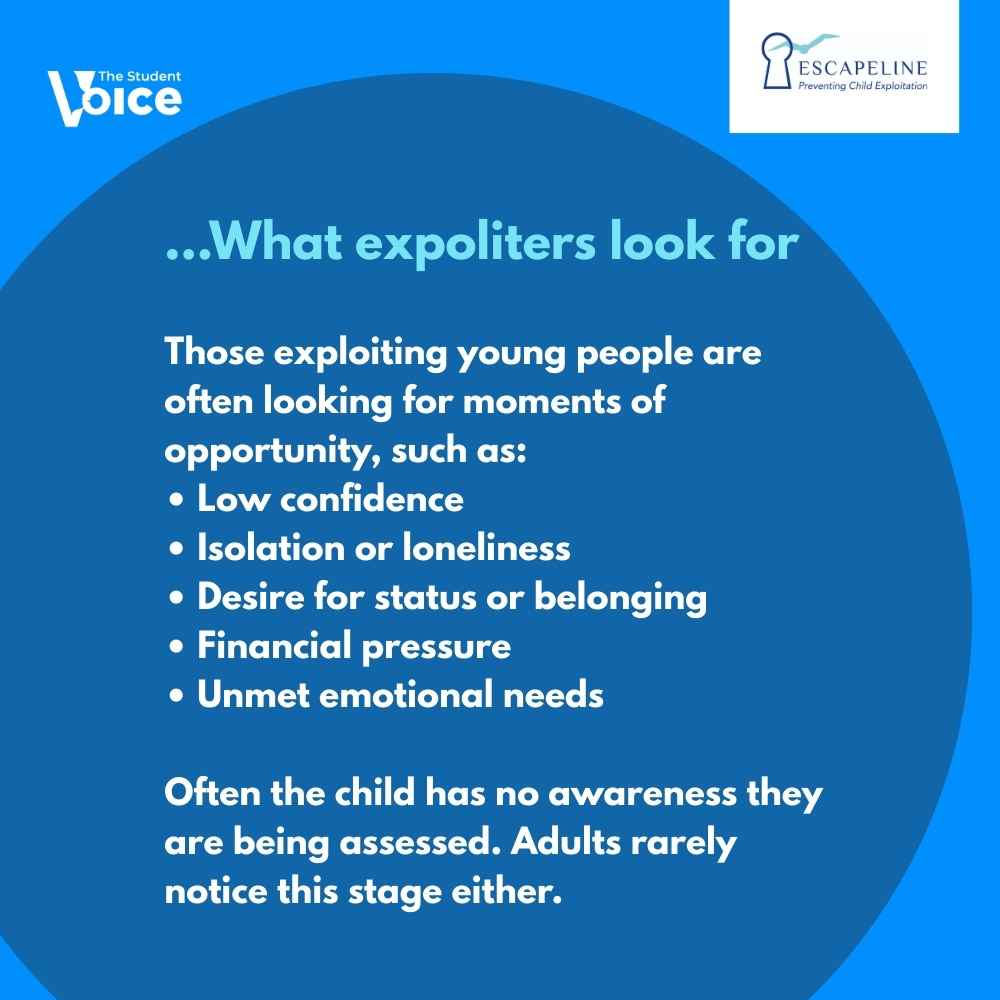
Any child can be targeted. There is no criteria or vulnerability. Targeting children from loving, caring homes and middle-class families. Children who are not on anyone’s radar. Those targeting children look for unmet needs, low confidence, isolation, desire for status, financial pressure, or simply a child who wants to belong. Often, the child has no awareness that they are being assessed. Adults rarely notice this stage either. There is no obvious “incident.” But the groundwork is being laid.
2. The Experiment Stage
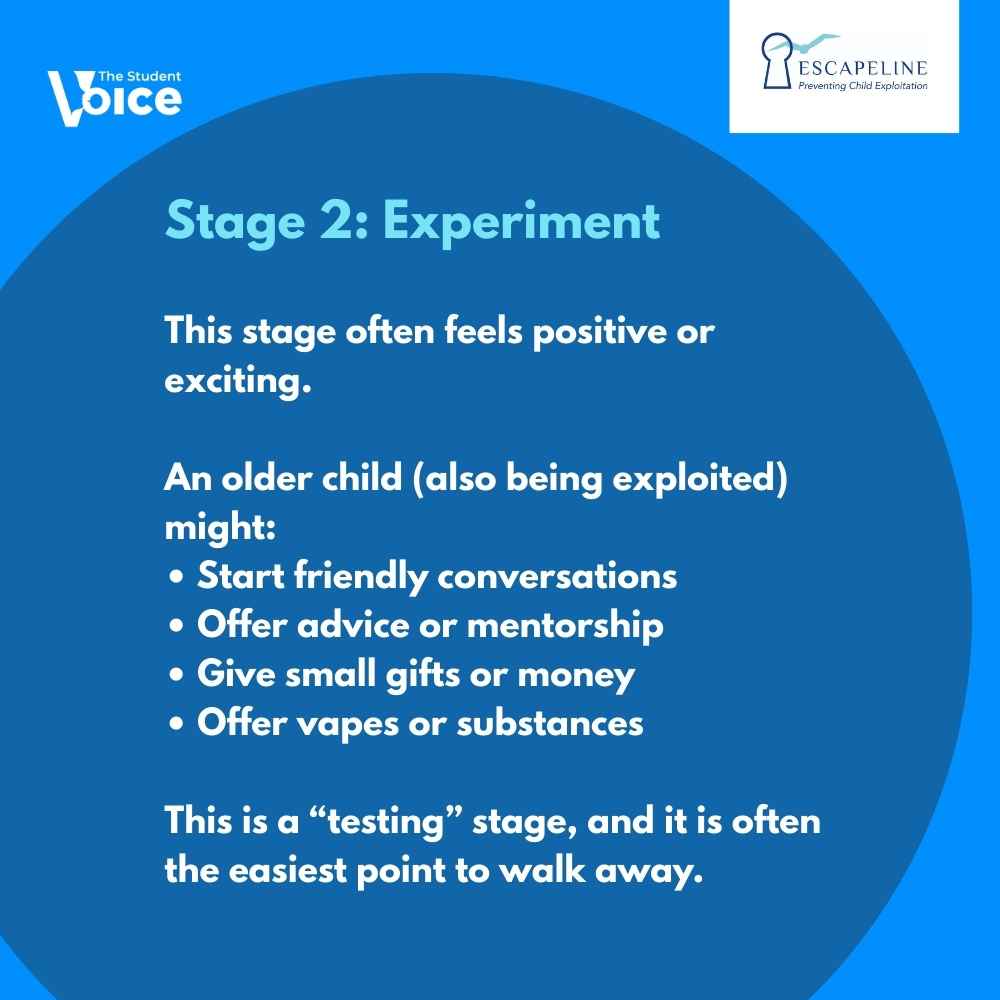
Importantly, this is one of the easiest stages for a young person to walk away from, if they recognise what is happening. This is where exploitation begins to feel positive. An older, “cooler” young person might:
- Strike up casual conversations
- Offer advice or mentorship
- Provide small gifts or money
- Offer vapes or substances
- Test loyalty in subtle ways
This is the checking out stage. Checking if the young person is receptive when being approached. It may feel flattering. It may feel exciting. It may feel like they are wanting to be your friend. (The hooked stage is the grooming stage not the experiment stage. This is just them checking out and the stage the young person can walk away without any problems) This is a critical time for young people to be educated on knowing the signs and how to respond. Because at this point, the young person is not yet fearful. They are building trust. They are receiving attention and validation. The relationship appears voluntary. This is also the moment where education and confidence make the biggest difference. If a young person understands that they are being checked out looks to be drawn into this, like, they are far more likely to disengage early, and it is the safest and simplest point for a young person to disengage. But if we dismiss this stage as “normal teenage behaviour,” we miss our window.
At this stage, there are usually:
- No debts
- No threats
- No coercion
- No violence
The young person still has freedom of choice. This is why early education matters so deeply. Young people need to know that if they are ever approached, they should:
- Disengage immediately
- Leave and go to a safe place
- Tell a trusted adult or report it
However, we must recognise something equally important. Not every young person feels confident enough to tell an adult face-to-face. Some are very fearful of:
- Being judged
- Getting into trouble
- Not being believed
- Being seen reporting in school (if older peers are targeting them)
No child should feel that silence is their only option. Young people also need to know that if they do not feel able to speak to a trusted adult at school, there are other options, including national helplines, local support services, or online reporting platforms. This is why schools must provide clear, accessible and varied reporting routes for children, and not wait for parents and staff to spot the signs. Digital reporting systems can provide a safe space for young people who are anxious about speaking in person. Student reporting tools, safeguarding apps, or monitored email inboxes allow children to share concerns discreetly. Opportunities to report should be:
- Regularly communicated
- Visible around school
- Explained in assemblies
- Reassuring in tone
The targeting and experiment stages are the moments where prevention is most effective, and where intervention is least complicated. If we miss them, the situation becomes significantly harder to reverse.
3. The Hooked Stage
This is the grooming stage. This is where they get into the child’s head and behaviours will be noticeable. They will talk using gang language, change their clothing, listen to drill music, will be isolated from their old friendship group and family, as well as the below. A young person may be told to:
- Hold or deliver a package
- Carry money or weapons
- Commit low-level offences
- Introduce peers to the group
They may be paid. They may feel respected. They may feel part of something. Belonging is powerful. Before coercion begins, many children experience identity, status and protection within the group. That sense of belonging can be intoxicating, especially for a young person who previously felt invisible. This is where dependency deepens. The young person may now fear losing that identity as much as they fear consequences.
4. The Trapped Stage
This is where the tone shifts. What once felt exciting becomes threatening. We begin to see:
- Fake muggings or staged robberies
- Drug debts
- Intimidation and violence
- Sexual exploitation
- Forced assaults
- Pressure to recruit other young people
By this stage, fear and shame are powerful silencing tools. A young person may believe they have chosen this path, even though manipulation and coercion have been present from the beginning. The earlier stages often go unnoticed because they look harmless. That is precisely why understanding this process matters.
Exploitation is not an event. It is a progression. If we recognise the progression, we can interrupt it. But prevention is not only about recognising stages, it is also about understanding vulnerability.
Author Bio – Lisa, Escapeline
Lisa works on the frontline with Escapeline, a charity dedicated to raising awareness of Child Criminal Exploitation and supporting children, families, and professionals to recognise and respond to the risks of exploitation. Through school workshops, parent sessions, and professional training, Lisa delivers preventative education focused on early intervention, contextual safeguarding, and empowering children to make safe choices. Her work supports communities across the UK to better understand the evolving nature of exploitation and how to disrupt it before harm escalates.