Part 4: Shaping Outcomes Early. Why Language and Primary Education Matter in Exploitation Prevention

Swipe the Carousel
Language and Exploitation prevention in practice
By Lisa, Escapeline
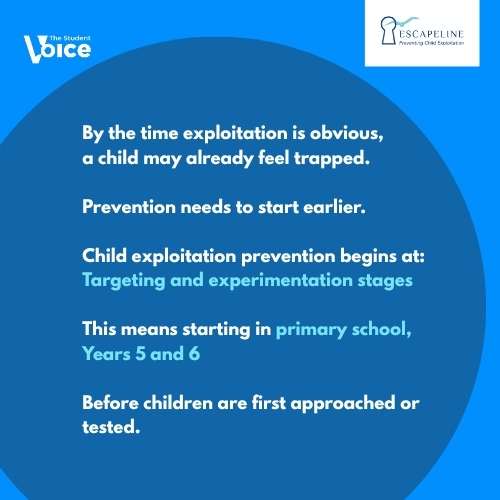
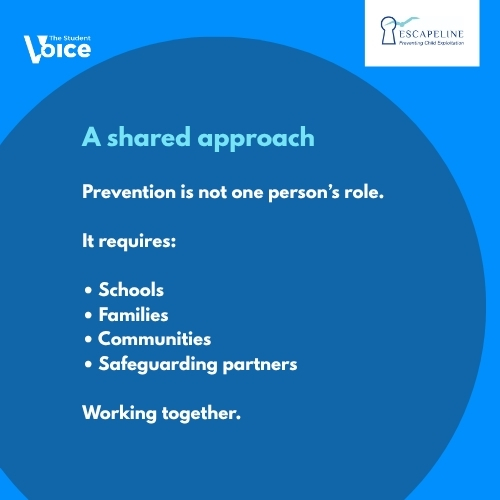
By the time exploitation is obvious, a child may already feel trapped. Child exploitation prevention must begin earlier, at the targeting and experimentation stages, and crucially, this means starting in primary school, particularly in Years 5 and 6, before children are first approached or tested. Child exploitation prevention must involve schools, families, communities and safeguarding partners working together.
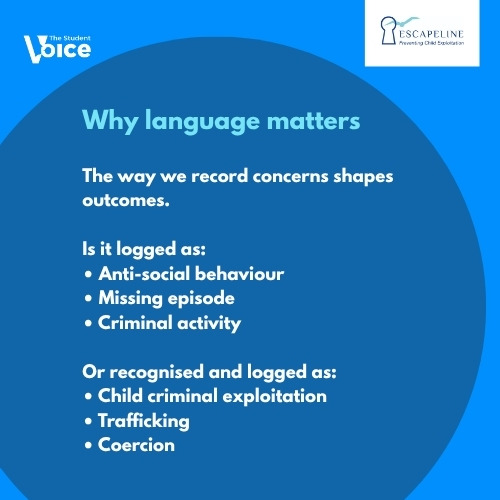
Why language matters
The way we record and categorise concerns has real consequences. Is the incident logged as:
- Anti-social behaviour?
- A missing episode?
- Criminal activity?
Or is it recorded as:
- Child criminal exploitation?
- Trafficking?
- Coercion?
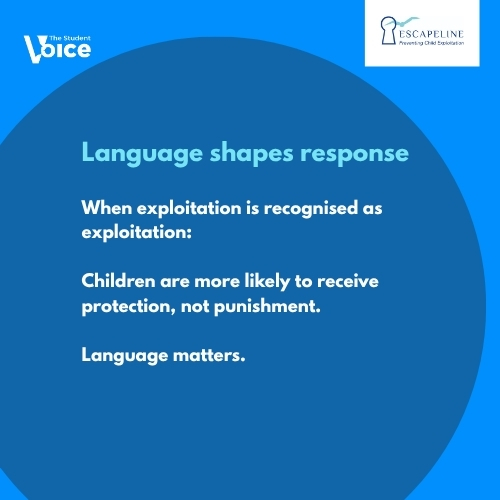
Using the correct terminology changes the safeguarding response. When exploitation is recognised as exploitation, the child is more likely to receive protection rather than punishment. Language shapes outcomes.
The power of schools
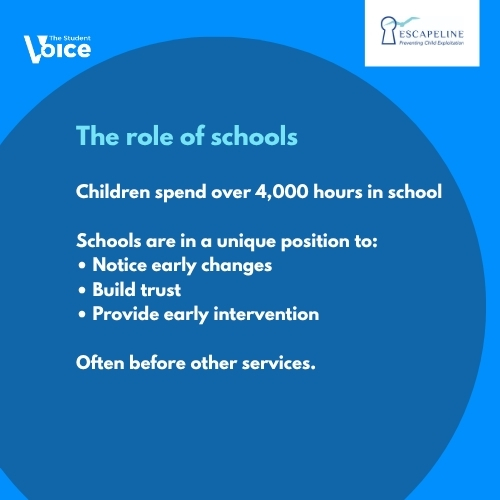
Children spend over 4,000 hours in school. Schools are not just education settings; they are safeguarding partners with unparalleled access to early warning signs. This is why safeguarding partnerships increasingly want to hear from schools. Teachers, pastoral teams and DSLs often see subtle changes long before external services do.
Starting conversations in Years 5 and 6 gives children the knowledge and confidence to recognise when something does not feel right, before patterns of exploitation begin to take hold.
What exploitation prevention looks like in practice
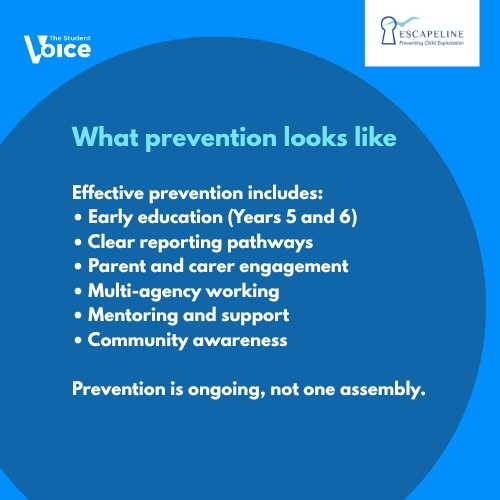
Effective prevention includes:
- Early education beginning in Years 5 and 6
- Clear reporting pathways for children
- Parent and carer workshops
- Contextual safeguarding and mapping tools
- Multi-agency meetings
- Mentoring programmes
- Collaboration with voluntary and statutory organisations
- Community awareness campaigns such as Stop CCE Awareness Week
Prevention is not one assembly. It is sustained awareness.
A simple assembly exercise with young children
In assembly sessions with primary children, I often present a scenario: An older boy approaches you in the park. He says he does not want to walk into town with a heavy bag and asks if you can hold it for a few hours. He offers you £25.
When I ask who would take the bag, many hands go up, and when I question why, the usual responses are:
“Because it’s £25.”
“Because I’m just holding it.”
At this age, the developing brain does not automatically ask questions. “What is in the bag?” or “What might be expected in return?”
We then explore the risks together, and I start asking:
What if that money belongs to someone dangerous? What might they demand from you next? Who would be looking for that bag?
The room changes.
When I ask again whether they would take it, every hand stays down.
Education at this stage works.
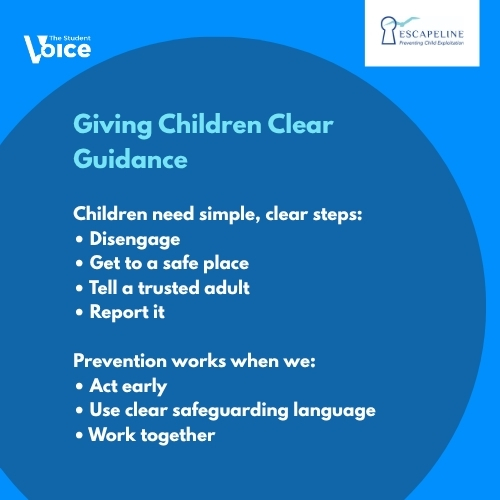
But we must also give children clear guidance:
Disengage. Get to a safe place. Tell a trusted adult. Report it.
A shared responsibility
Prevention works, but only if we intervene early, use accurate language, and work collectively. If we want to protect children, we must stop asking: “How did this happen?”
…and start asking: “Why didn’t we intervene sooner?”
Looking beyond the signs: preventing child exploitation
Across these four parts, one message remains clear. Child criminal exploitation is not a single moment, but a progression. It can affect any child, often in ways that are not immediately visible. The earlier we understand the stages, recognise the subtle signs, and remain open to the possibility of hidden need, the greater our opportunity to intervene. Prevention starts with awareness, but it is sustained through action, language and collaboration.
Safeguarding is not about reacting to harm once it is visible. It is about noticing what others might miss and creating the conditions where children feel seen, supported and able to step away before harm takes hold. If we want to make a difference, we must focus on early stages, remain open to unseen vulnerability, use empathetic, consistent safeguarding language, and act together. Earlier understanding leads to earlier intervention, and earlier intervention changes outcomes.
If you want to read the whole series on Child Exploitation with Lisa from Escapeline, find them here.
Author Bio – Lisa, Escapeline
Lisa works on the frontline with Escapeline, a charity dedicated to raising awareness of Child Criminal Exploitation and supporting children, families, and professionals to recognise and respond to the risks of exploitation. Through school workshops, parent sessions, and professional training, Lisa delivers preventative education focused on early intervention, contextual safeguarding, and empowering children to make safe choices. Her work supports communities across the UK to better understand the evolving nature of exploitation and how to disrupt it before harm escalates.