Contextual Safeguarding: A framework for doing the right thing






Swipe the Carousel
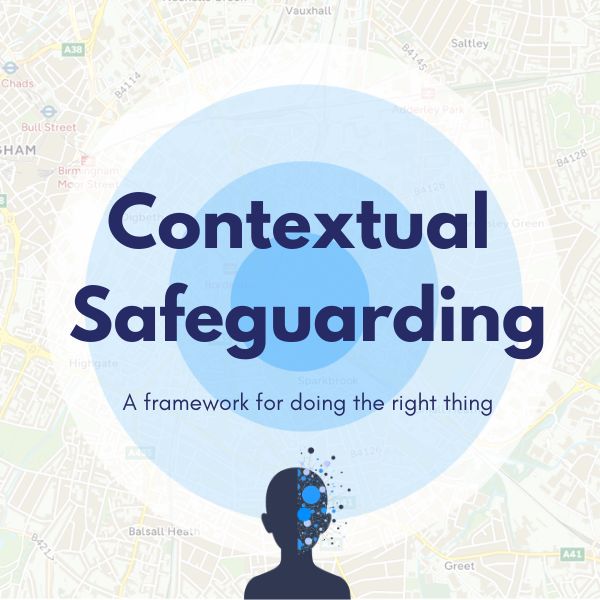
Contextual Safeguarding: A framework for doing the right thing
In our recent webinar, we explored the challenge that sits at the heart of safeguarding practice: how do we balance doing the right thing for children with doing the right thing for schools and organisations?
The answer, we believe, lies in adopting a common framework that allows us to work together, rather than in silos. That framework is contextual safeguarding.
Why Contextual Safeguarding Works
We see four powerful reasons why contextual safeguarding provides the foundation schools and safeguarding professionals need:
- It builds community: Contextual safeguarding challenges every part of the community to come together, drawing on different environments and lived experiences to create a culture of shared protection.
- It supports age-appropriate approaches: As children grow older, their relationships extend beyond the family home. Contextual safeguarding helps us recognise and respond to extra-familial harms, such as peer influence, friendships, and social groups that can sometimes be destructive.
- It creates a shared culture of safety: By acknowledging that responsibility for safeguarding extends beyond families, we can influence the settings where young people spend their time, including schools, social spaces, sports clubs, and online platforms, and make them safer.
- It gives us the chance to prevent future harm: When young people grow up in safe and supportive environments, they are far more likely to replicate those relationships in adulthood. Conversely, harmful experiences in childhood can perpetuate cycles of abuse later in life. Contextual safeguarding gives us the opportunity to break that cycle.
The Role of Student Voice
But a framework alone is not enough. To make contextual safeguarding work, we need a common language, and that language must come from the voices of young people themselves.
As Carlene Firmin identified in 2017, engaging with young people is a challenge for schools and organisations, but it is one we cannot ignore. To truly safeguard effectively, we must understand their lived experiences, and that means recognising the social rules that govern their lives.
For schools, rules are often adult-driven: attend classes, wear uniform, do your work. For young people, the rules may be very different, shaped instead by their peer groups, their environments, and what they feel they need to do to stay safe.
If we can understand those social rules, we have a much greater chance of designing interventions that make sense in the realities of young people’s lives.
Meeting the Challenge
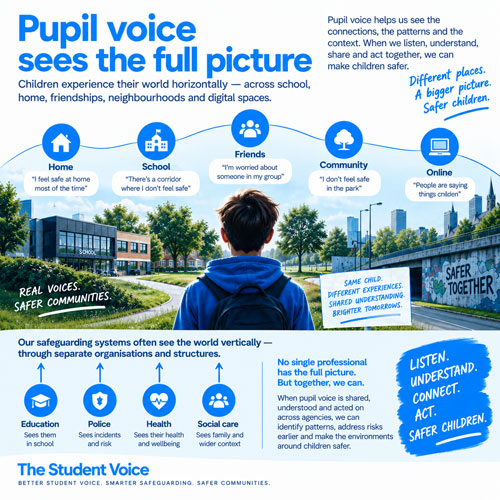
Safeguarding today is about protecting children from harm in every aspect of their lives, at home, in school, in their communities, and online. It is a huge responsibility, and it can feel overwhelming.
But by adopting contextual safeguarding, and listening to the voices of young people, we give ourselves the best chance to rise to that challenge. Together, we can create communities where children and young people are safer, better supported, and able to thrive.