Data Driven Case Study: Building Protective Capacity
Embedding student voice and contextual safeguarding to disrupt child on child relationship harm
At TASIS England, the prevention of relationship harm, inclusive of bullying, all forms of discrimination, sexual harassment and sexual violence, is not treated as a standalone intervention. Our response reflects and supports the mission of the school and is deeply woven into the fabric and teaching and learning of daily school life through a commitment to contextual safeguarding and the elevation of student voice as a common language.
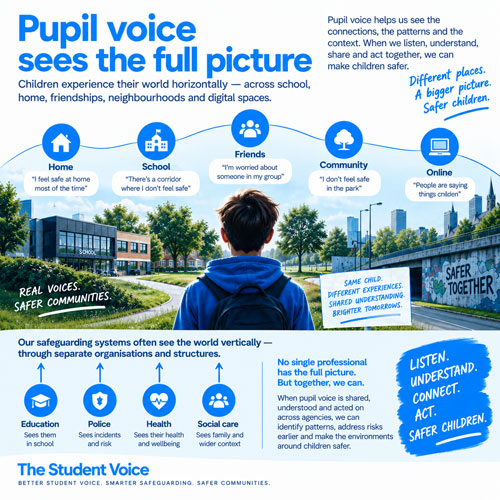
TASIS England recognises that harm often takes place in many contexts of a child’s lived experience, online, in social groups, and away from adult supervision. Responding effectively requires not only identifying individual cases of harm but transforming the environments in which harm is allowed to thrive. Central to TASIS’s safeguarding strategy is the use of contextual safeguarding as a framework, informed by Dr. Carlene Firmin’s pioneering work, to address extra-familial harm by understanding the social norms and peer dynamics that shape young people’s lives.
The school’s approach to disrupting these harmful patterns centres on breaking the “snitch culture”, which is prevalent across schools and adolescent life in the UK and beyond, driven by fear and silence and replacing it with a reporting culture built on compassion, responsibility, and empowerment. Through robust student-led reporting tools and open channels for student expression, TASIS England uses student voice not just as feedback but as an agent of change, empowering young people to influence the safeguarding culture around them.
This work is operationalised through the school’s Values in Action (VIA) program, a structured model that promotes principled behaviour through three key pillars: Advocacy, Active Bystanding, and Restoration. The VIA program encourages students to act with compassion by speaking up for others, to be principled by intervening safely and effectively as active bystanders, and to be open-minded by engaging in restorative practices that repair relationships and rebuild trust.
At the heart of active bystanding is the 4D intervention model, Direct, Distract, Delegate, Delay, giving students practical, safe tools to challenge harmful behaviour in real time. These tools are underpinned by the RESPOND (for staff) and BEACON (for students) frameworks, which guide the school community.
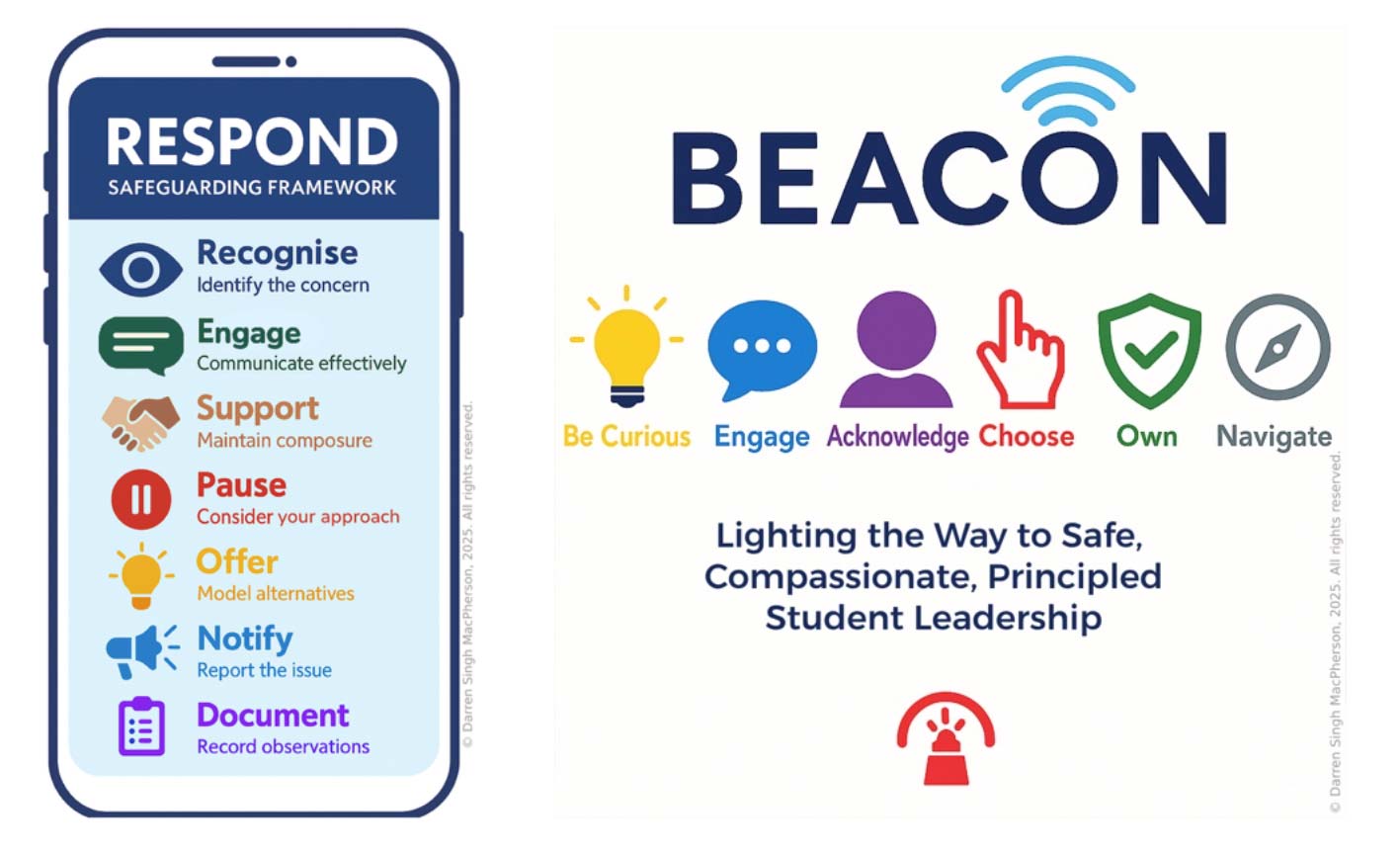
These approaches create a window of opportunity for our community to act before harm escalates, moving from passive witness to principled participant.
Through this integrated model, where student voice informs practice, and contextual safeguarding shapes environment, TASIS England is equipping its young people with the tools, language, and confidence to disrupt harm and build healthier peer cultures. By anchoring safeguarding in values and student agency, TASIS England not only addresses harm but actively cultivates a generation capable of creating safe, inclusive communities both within and beyond the school gates.

Written by Jason Tait
Director of Pastoral Care & DSL at TASIS (The American School in England) and Co-Founder of The Student Voice
In addition to pastoral care and safeguarding across his school, Jason helps schools leverage student input to drive systemic change. He combines expertise in child-centred design, social justice, and digital innovation. Jason is also the co-founder of award-winning platform The Student Voice.